



With community and collective power, we can create an equitable future
by: Katherine Schaff
posted on Friday, May 22, 2026
Earlier this month, I joined many of my friends and colleagues working in public health in the Fruitvale district of Oakland for May Day, a general strike, march, and resource fair celebrating the rights, dignity, and power of working people. Many of us already clock long hours to support the health of our communities and country, so why would we take to the streets?
Because moments like these remind us that health is built collectively and expands beyond the walls of clinics and public agencies. Public health starts with the conditions people live and work in, and those conditions are shaped by power. The people who set wage policies, decide whether hospitals stay open, and determine who gets protected by the law and who doesn’t hold tremendous power over our daily lives — power that they are not going to simply hand over. So, we must raise our voices to demand change.
Still, at a time when so many people are feeling weary from threats to their communities, it’s not enough to point out what isn’t working. As public health champions, we must also offer a vision for what’s possible. We must allow ourselves to dream.
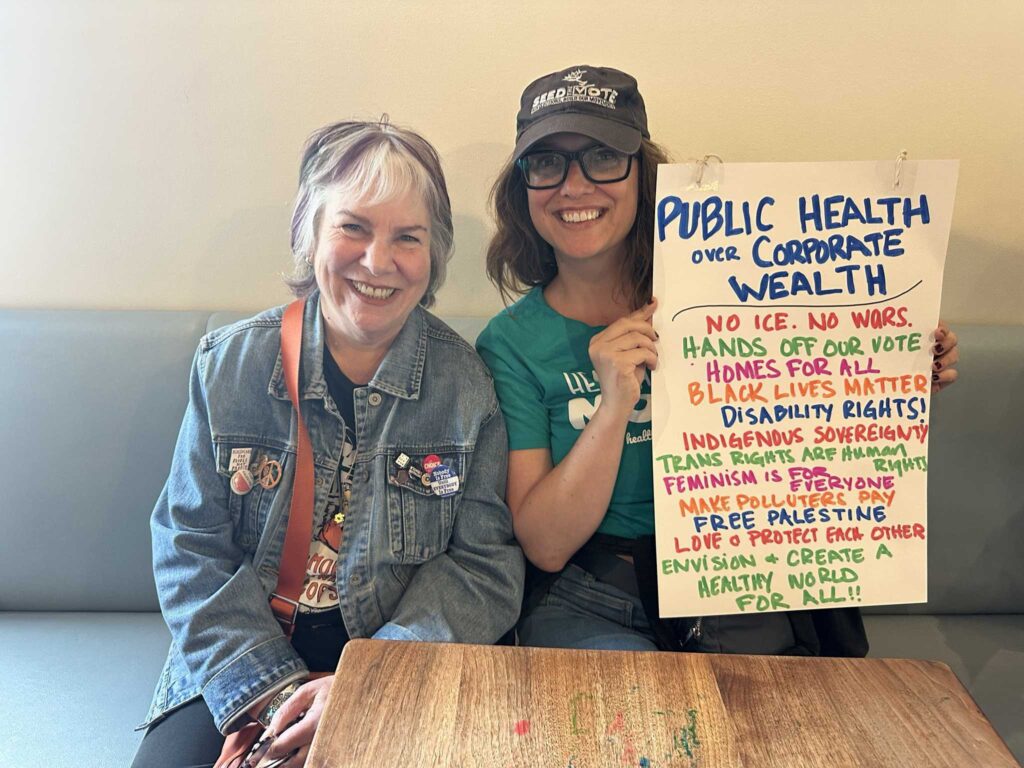
From time to time, I try a simple exercise: imagining what the world would look and feel like if we achieved racial and health equity. A world where everyone has what they need to be healthy. Things like jobs with dignity that pay enough to live and leave people with time to spend with family and friends. Good schools. Transportation that connects us while taking care of our Earth. The peace that comes from having a roof over our heads and a full belly each night. Laws and policies that see people as fully human and ensure their rights are protected. And if I’m truly dreaming big, we’d all have the things we need not just to survive, but to thrive.
It can be hard to really picture this, but each time, I try to push a little further.
In this vision, I’m still working hard at a job I care about, but I’m not carrying the quiet fear of whether I’ll be able to retire, or whether an illness could undo everything, and in my deepest dreams, everyone has a sense of ease, including me. When I go for walks with my friends, there would still be hardships — the loss of a loved one, the heartbreak of a relationship that didn’t work out — but we’d spend more time talking about things that excite us, things that bring us joy, like sending a child off to college without worrying about the immense debt, or staying close to loved ones as they age and having supports to help with their care. There would be no fear of friends and neighbors getting caught in ICE raids, and we wouldn’t have to worry about how to stay in the Bay Area we love when homeownership and security are beyond the reach for many. I would be excited for the children in my life and how their paths will unfold, without the creeping fear that wildfires, rising oceans, and extreme heat will rob them of their futures.
The barriers we need to remove to create this world are not abstract. They were named on the signs I saw at the march from my public health colleagues and all of our allies who work tirelessly to make this dream a reality. Signs that connected wages, working conditions, housing policy, and climate policy to our collective health. For the resource fair, there were tables helping people connect to health services, housing advocacy, saving our public transit, and connecting people to ways to stay engaged between and beyond voting. The messages on our signs challenged Congressional decisions that funnel money to ICE while our public hospitals close, and called out decisions that fill the pockets of corporate CEOs while children go to bed with empty stomachs.
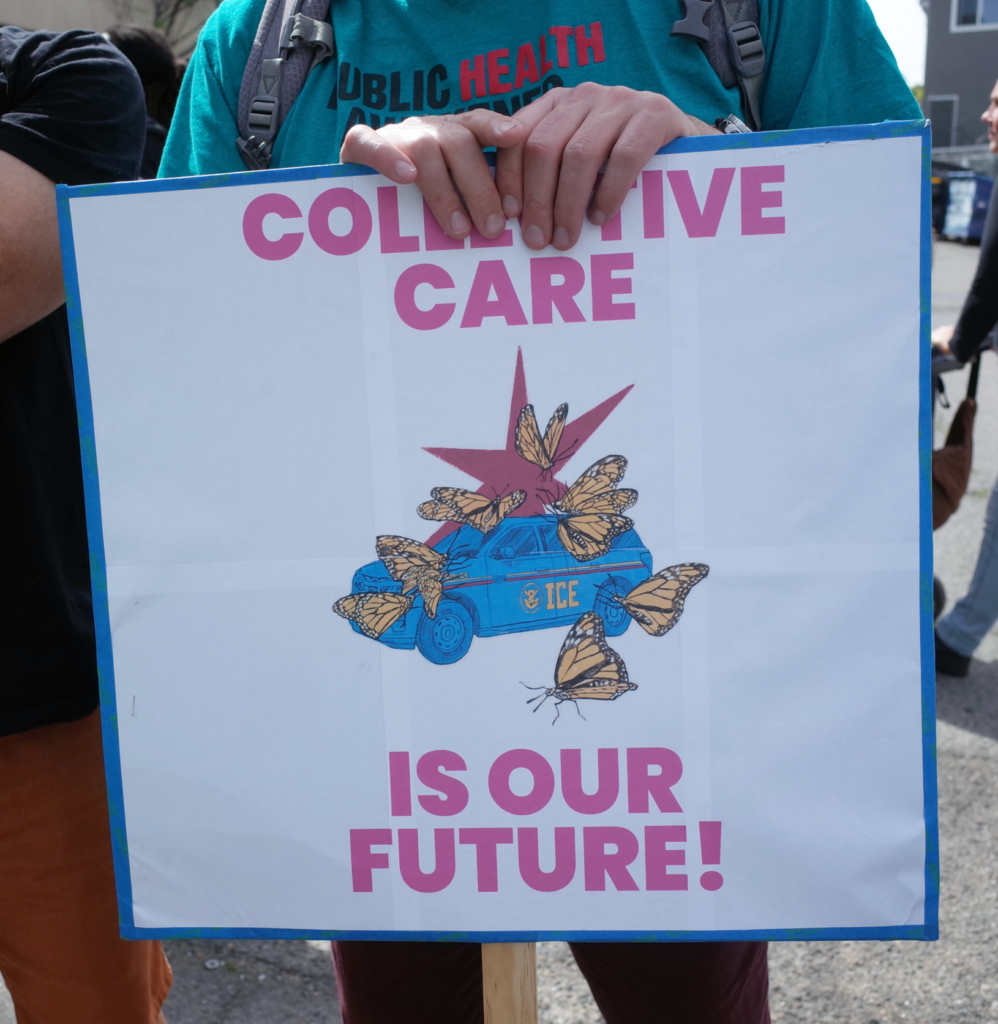
Oakland resident Sophie Simon-Ortiz, who is the Organizing Project Director at Health in Partnership (and leader of the national mobilization that saw public health contingents in Atlanta, Boston, Chicago, Colorado, Holyoke, Kansas City, Los Angeles, Minneapolis, New York City, Oakland, Providence, Sacramento, San Jose, Seattle, and Washington D.C.), summed up why we were in the streets: “What does it say that we have billions of dollars for war, ICE kidnappings, and surveillance while millions of our neighbors and loved ones are struggling to pay their medical bills or rent? It’s time that all of us — not just corrupt politicians, tech bros, and war profiteers — can live full, healthy, dignified lives.”
At the march, I was reminded that many others clearly see these connections and have been acting on them for generations and that public health does not, and cannot, go it alone. The generational wisdom was on full display in Oakland — from our elders who have been marching for decades to youth raising new questions in new ways that push my thinking. The solidarity was also clear: While some groups and signs forefronted a single issue, there was a lot of love and support for one another and recognition that our causes are interconnected.
For those of us in public health, especially when we are tired, stretched thin, or unsure how to engage when this moment asks something different from us, the march reminded us that there is always a step forward, a way to move toward the world we try to envision, the world we want to live in, and the world we all deserve. I didn’t walk away from the event with complete answers. But I did walk away with a deeper sense that we are not alone — that there is a wellspring of people who will continue to dream of a world where everyone has what they need to live healthy, fulfilling lives, and who are organizing every day to bring that world closer.