


Overcoming political overwhelm: 3 strategic communication lessons from a community organizer
by: Charles Udeze
posted on Thursday, October 02, 2025
When the Department of Health and Human Services began the process of laying off 10,000 federal employees and terminating billions of dollars of federal contracts in March, public health organizations across the country watched with dread. We knew that the administration’s policies and rhetoric against science, diversity, equity, and inclusion would obliterate much of the progress we gained after the worst parts of the COVID-19 pandemic.
We were right.
Vital federal services, like monitoring lead exposures, upholding workplace safety, and preventing disease outbreaks, have since been eliminated. To fund tax cuts for billionaires, Republicans cut over $600 million from Medicaid funding, effectively stripping the health care of millions of people. These actions will surely have reverberating effects on communities everywhere. And that’s just a snapshot of the bleeding.
Amidst ongoing layoffs and service cuts, it’s easy to feel overwhelmed. As a community organizer, I know the pain of having to start over from square one. I know what it feels like to see months of canvassing go up in smoke in a single city council meeting. And I’ve seen how internal struggles over approach can paralyze joint action. But I’ve also witnessed community members come together post-mortem to take their power back.
This is the stage we’re in right now. This is when the real work begins.
The current moment reminds me of a time when my community in Stockton, CA, overhauled our broken school district. Though the work happened on a smaller scale, the challenges we were up against — fraud, corruption, and suppression of the truth, to name a few — run parallel to the federal malfeasance we’re witnessing today. The campaign we ran to repair a badly battered system holds lessons for fellow organizers, advocates, and anyone resisting the United States’ sudden and steep slide into fascism. Here’s what happened:

The challenge
During my time as an organizer in California’s Central Valley, Stockton Unified School District was consistently among the worst-performing school systems in the state. Students reported dismal scores and graduation rates, spurred by high staff turnover and few educational and social supports. It was even worse for Black and Brown students of the district, which had repeatedly violated their civil rights. Additionally, two county grand jury reports found that the SUSD Board of Trustees had mismanaged funds and violated board bylaws, leading to a $30 million deficit by the 2024-2025 school year.
Beyond financial concerns, the Grand Jury reports also connected the Board’s misconduct to low morale and high turnover among teachers and staff. Between 2005 and 2024, SUSD had 14 different superintendents and was at risk of coming under state control.
Despite the damning findings, the Board continued to deny the veracity of the reports’ conclusions and operated as usual. School board meetings were akin to WWE matches, with board members shouting and pointing fingers at one another for their inaction. Meanwhile, community members agonized over the implications of the board’s poor leadership. Students continued to suffer academically, emotionally, and physically.
The path to change
The community called for change, but the Board refused to listen. Because of this, our community took change into our own hands.
Lesson 1: Success requires shifting power — be sure your communication goals reflect that.
In 2022, local community organizers formed FixSUSD, a loose coalition of parents, students, teachers, and community members that aimed to fix the school board’s dysfunction. The group set its sights on unseating the board members who were up for re-election that year. The group met after school days and board meetings to fortify our strategy. We needed to make voters aware of the school district’s problems and tie incumbent school board members to those issues. We formed messages from the findings of two grand jury reports. It was just a matter of finding the best ways to disseminate them.
Lesson 2: If a message doesn’t reach people, it’s not effective.
It’s essential to know how your audience gets their information. Sometimes, the community engagement methods you traditionally use may not be the best fit for your intended audience. As community organizers, we started with our bread and butter. We phone-banked and went door-to-door in voting neighborhoods, hoping to generate support from sympathetic residents dismayed by the news coming from the school board; however, we quickly learned that many people were unaware of what was going on.
FixSUSD went back to the drawing board to rework our message. Understanding that most parents did not have the time to pore over the grand jury reports or attend school board meetings, we distilled the collection of issues down to a few, specific points with clear implications for student performance and well-being. The team then developed some quick-hitting flyers and social media posts, visited school campuses in key districts and slipped reading materials to parents who were picking up their kids, and made ourselves available to local news outlets. The message at the end of each interaction was clear: to fix Stockton Unified School District, we need to unseat its current school board members in November.
Lesson 3: Messengers matter as much as your message.
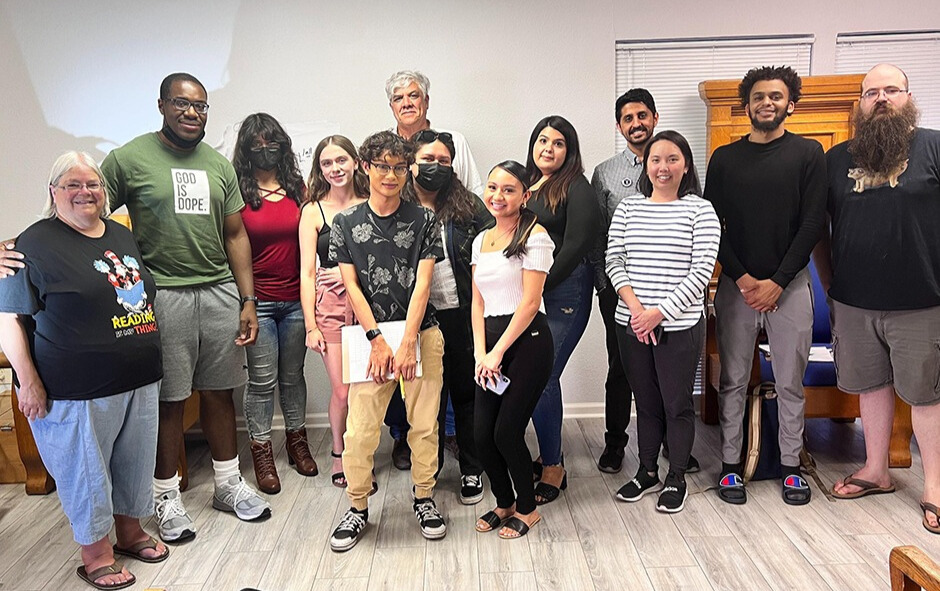
Though FixSUSD members communicated this unified goal in all of their engagements, it appeared in different forms, depending on who you talked to. Our diverse coalition brought many skills with us; leaning into those differences kept our messages authentic, making it easier for people to relate to and trust us. Some members livestreamed school board meetings, which captured the raucous nature of school board meetings. Others helped bring new people to the coalition and got them comfortable speaking publicly about FixSUSD’s cause. The teachers in our coalition shared stories about their experiences working in the district and forming movements with their colleagues on campus. I supported a group of young people who published a report of SUSD student experiences that we then shared with a network of education and workforce partners in Stockton. All of these efforts helped us acquaint the community with the issues and brought about the desired effect.
The outcome
On Election Day in November 2022, voters replaced three incumbents with new school board members more willing to listen to the community. FixSUSD had accomplished its goal. The air of school board meetings changed almost instantly, with district leaders being more visible and transparent. The new board members established a Transformative Justice Subcommittee and Black Students Thrive Subcommittee to identify solutions to the district’s longstanding racial justice and academic performance issues. The district also invited advocates to oversee its financial processes and hired a new superintendent who is now one of the district’s longest-tenured leaders in over eight years.
Moving forward
In moments like this, where those in power choose not to listen to our pleas for more resources and better institutional stewardship, we must organize our communities to dismantle the power structures that are not serving our needs. To do that, we must strategically communicate our demands and actions with one another. Public health professionals and advocates seeking to restore the wellness and dignity of the communities they’re serving must support messaging that is unified, accessible, and targeted toward the community. By crafting clear communication goals while remaining patient and flexible, calling in partners, and listening to our communities to amplify effective messages, we can inspire collective action. We can restructure a society where communities cannot be overwhelmed by unjust political forces if we are willing to organize, strategically communicate, and exercise our power collectively.