


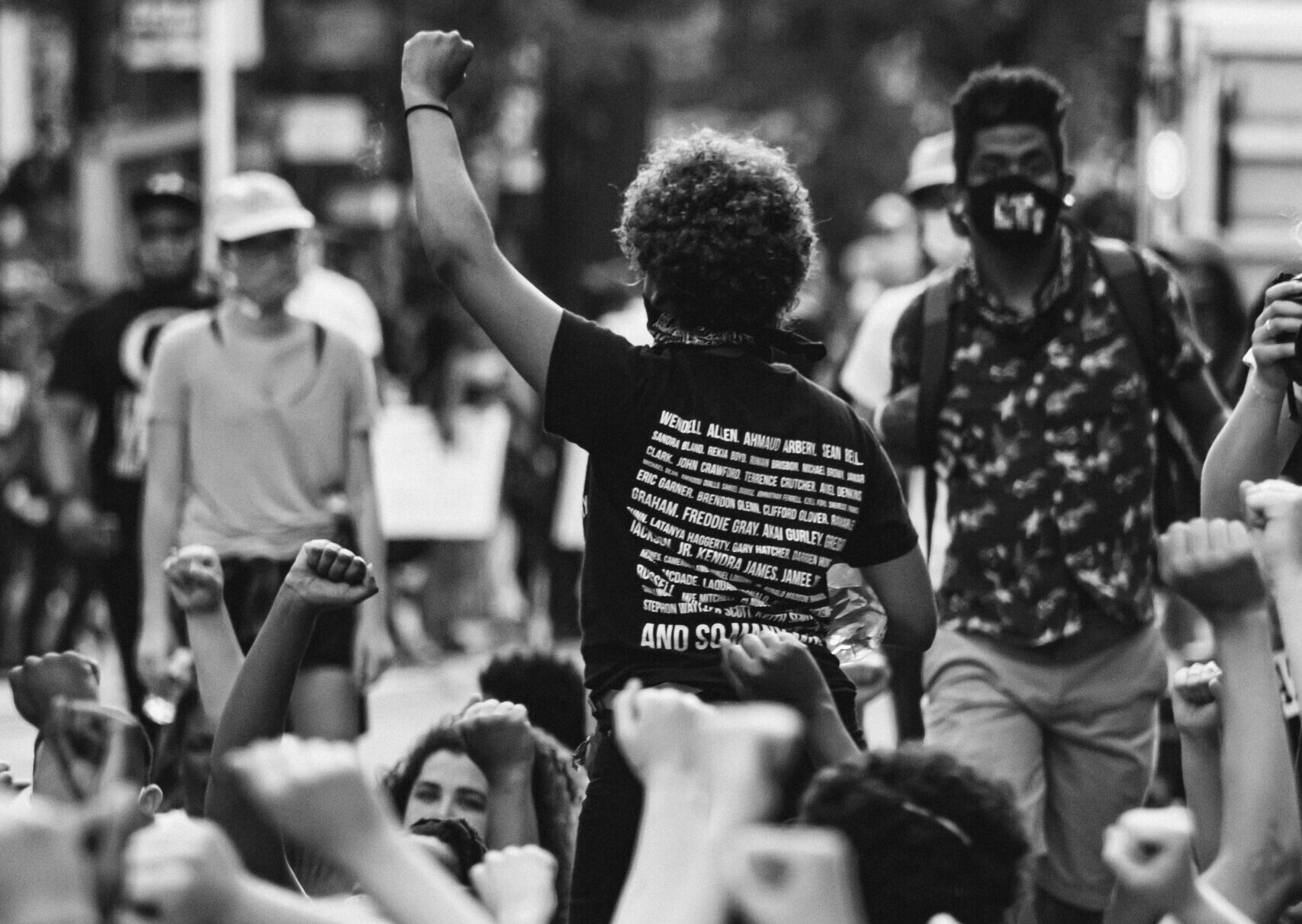
Flipping the narrative about state-sanctioned violence
by: Charles Udeze
posted on Wednesday, July 01, 2026
Last September, in my hometown of Stockton, police killed Rocco Robinson, a teenage man of Black and Asian descent. His family was left not only to grieve a significant loss but to navigate a narrative landscape that emphasized their son’s alleged noncompliance over his death.
In the aftermath of police killings, official law enforcement accounts often shape news narratives and the public’s understanding of events. The talking points are consistent: Law enforcement agencies at all levels of our government, as well as the United States military, justify their violence toward civilians by claiming they are protecting the safety of their officers from an unruly, noncompliant public.
This was the case a decade ago this month, when Baton Rouge officers fatally shot Alton Sterling after claiming that he had a gun on him. Advocates called for a trial to look into possible police misconduct, but detractors refrained from taking action, claiming that it was Sterling’s noncompliance that got him killed. The day after Sterling’s death, officers in Falcon Heights, Minnesota killed Philando Castile in front of his partner and daughter, even though he complied with the officers’ orders and informed them of the firearm in his vehicle. Is compliance the issue?
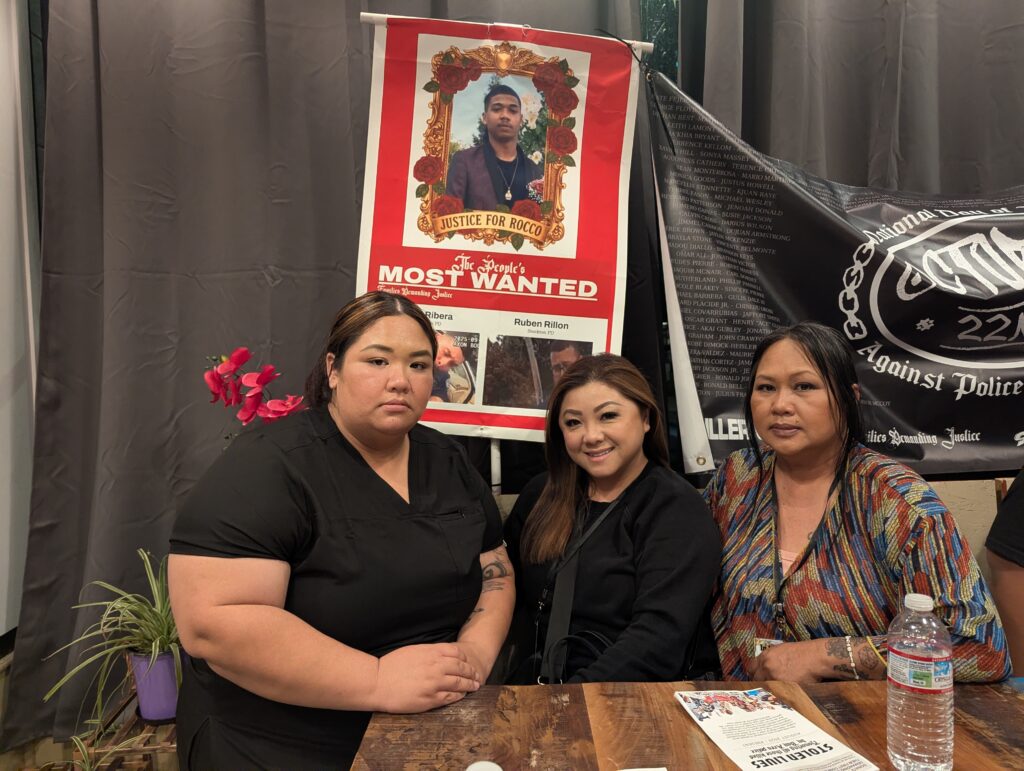
Police officers are rarely tried in court for shooting civilians, and even if they are (like in Castile’s case), they are often acquitted of wrongdoing. In Rocco’s case, family members and organizers were determined both to challenge the narrative that noncompliance should justify the killing of civilians by police and to try the officers responsible for murder. They organized a campaign that painted a more complete picture of the teen, sharing stories about Rocco the grandson, Rocco the volunteer, and Rocco the person who deserved to lead a full life. They also harnessed the power of Stockton’s media environment to raise questions about accountability and transparency, and about how Robinson’s death could have been prevented.
How can other advocates similarly challenge problematic narratives surrounding police brutality and other forms of state-sanctioned violence? And how can we translate those efforts into meaningful policy and systems changes that bring justice to families like Rocco’s?
To learn more, I attended a police brutality forum hosted by Rocco’s family and local organizers. The forum offered meaningful insights into the tactics community messengers can use to counter dominant narratives about police violence. Berkeley Media Studies Group’s Layers of Strategy framework offers a structured roadmap for understanding how Rocco’s advocates moved from highlighting an individual tragedy to working to achieve specific policy changes. Advocates working on any public health or social justice issue can use the framework to move conversations beyond isolated incidents and toward systemic accountability.
Overall strategy
Before you know what you want to SAY, you have to know what you want to DO. When embarking on an advocacy campaign, advocates should first define the specific problem, articulate its policy solution(s), and identify the targets, allies, and actions necessary to achieve change. Otherwise, advocates risk spinning their wheels with general awareness campaigns that don’t actually change systems.
For Rocco’s family, the problem was clear: Stockton Police Department and other local media outlets portrayed Rocco as a gang-adjacent, violent adult who threatened officer safety. They disregarded how Rocco volunteered at Stockton’s local Buddhist temple and how he cared for his grandmother and little brother. This negative portrayal reinforced the dominant narrative that the police are right to execute civilians who don’t comply.
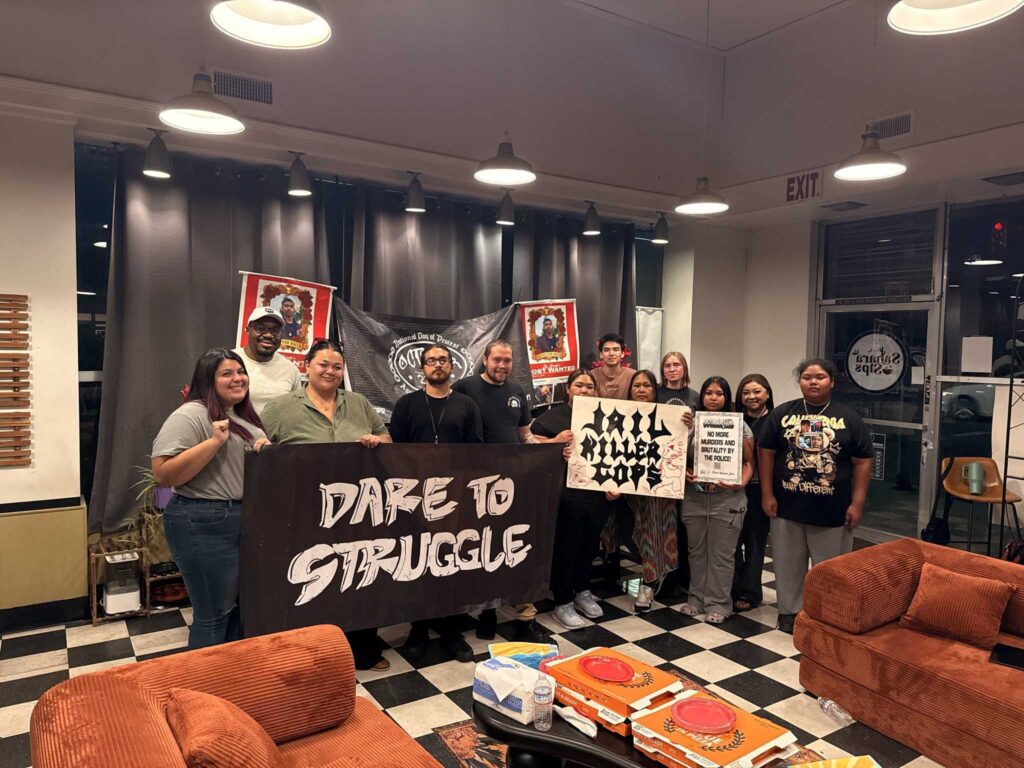
Undeterred, his family set out to advocate for policy changes that would bring about justice for Rocco and for other families hurt by police violence. The goal was to build and motivate a critical mass of Stocktonians — primarily those most likely to encounter local law enforcement — to hold police accountable. By spreading Rocco’s story and encouraging other local victims and survivors to tell their own, they could push back against the dominant narrative.
Rocco’s family coordinated with the Bay Area chapter of Dare to Struggle, a multinational advocacy organization focused on ending police brutality and holding police accountable for violence; Stockton Stands, a Stockton, California-based abolition group founded during the 2020 George Floyd protests; and other local partners to address the slanted portrayal. The family and organizers coordinated “Justice for Rocco” week, a series of public demonstrations and community engagements that told the real story of Rocco Robinson. They also sought to put public pressure on the San Joaquin County District Attorney and other law enforcement agencies to achieve three objectives:
- Release the full footage of the shooting of Rocco Robinson, along with details of the investigation into the situation;
- Launch an investigation into police misconduct by an independent agency; and
- Charge and try officers Kyle Ribera and Ruben Rillon for murder.
Media strategy
Advocates should think strategically about whether media attention is necessary and beneficial for their campaign. Often, media engagement can help advocates reach their target audience to advance their primary goals.
Tragically, Rocco is no longer here to defend himself, so his family must carry the burden of making his real story known. Unfortunately, this is the case for most families affected by police violence. BMSG previously analyzed news covering 162 fatal officer-involved shootings that occurred in 2017 and found that only about 10% of cases generated five or more articles about the incident. This was primarily due to the attention drawn by the victims’ families, whose advocacy and continued calls for justice sparked momentum for enhanced police accountability measures, such as in the case of Desmond Phillips from Chico, California.
Despite urging law enforcement to cease defaming Rocco’s character, his family continued to see victim-blaming press briefs, social media posts, and harassment by police and local social media channels. For this reason, Rocco’s family decided that getting the attention of local media, particularly the newspapers The Record and Stocktonia was the best way to spread Rocco’s real story — that of a soft-spoken and family-oriented young man — to the rest of the city.
They leveraged the police brutality forum to garner media coverage for their demands for greater accountability and transparency from the Stockton Police Department, San Joaquin County District Attorney’s Office, and other local law enforcement agencies. They sought answers from the police about their protocol for investigating police-involved shootings and adjudicating matters of police violence.
Message strategy
No message is received in a vacuum. Every person encounters a story, argument, or direction in the context of their lived experience, culture, pre-existing beliefs, and social environment, all of which influence their support.
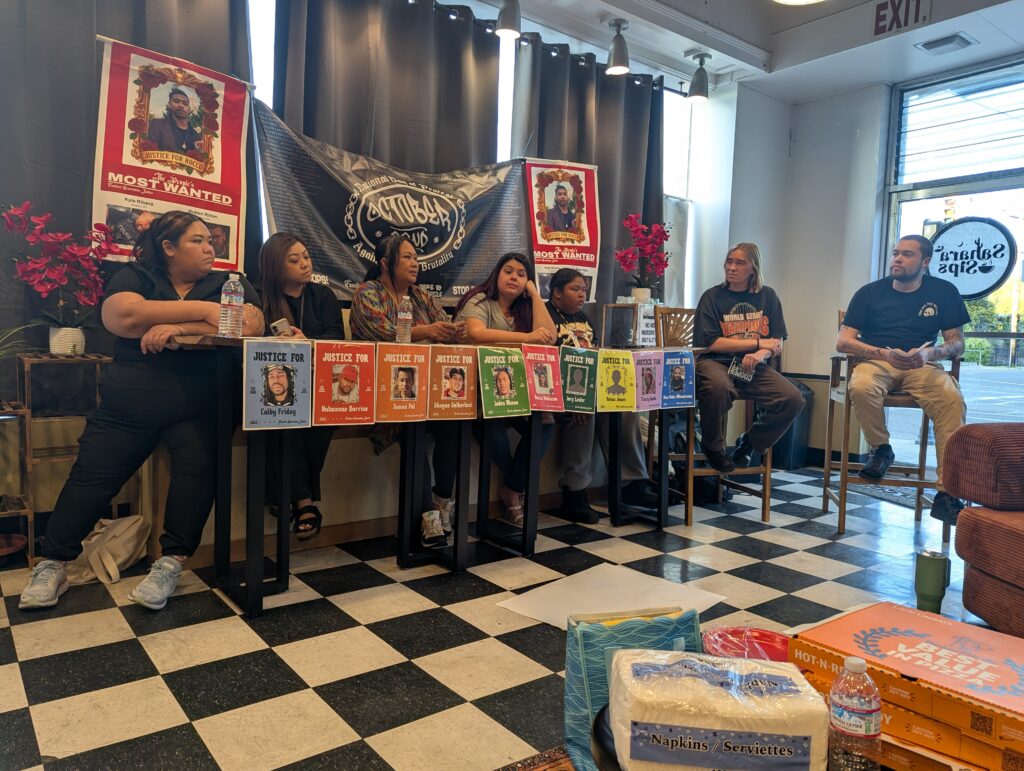
Taking that into account, Rocco’s family framed their messages around the shared value of justice to create compelling messages that would resonate with their intended audience. But their effort wasn’t without hiccups. During the forum, an attendee asked Rocco’s family what the message “Justice for Rocco” meant. In a room full of people with varying relationships to law enforcement and varying knowledge of Rocco’s execution, they quickly realized that individuals within the audience might have different ideas of what “justice” actually is.
Rocco’s mother reiterated the family’s demands. They wanted: 1) transparency, with the full release of the details of the situation, 2) an investigation of police misconduct by an independent agency, and 3) officers Kyle Ribera and Ruben Rillon charged and tried for murder. “Justice” in this case diverges from the status quo: Virtually all police departments investigate misconduct internally. Police are rarely tried in court for their misconduct. When their actions are deemed improper, they’re rarely convicted and stripped of their duty; instead, they are transferred to other police departments.
To fight back against the status quo and the dominant narrative of impunity that comes with it, the “Justice for Rocco” campaign’s message needed to be fairly consistent. Inconsistent messaging allows opponents to exploit contradictions, whereas a disciplined messaging strategy keeps the public’s focus on the advocates’ values and policy goals. It is also easier for diverse messengers and partners to repeat to their audiences.
Flyers, posters, and social media posts from the demonstration all reflected the same calls for justice, accountability, and transparency. They also expanded the conversation beyond Rocco by bringing attention to the repeated acts of violence that the Stockton Police Department has committed against community members, primarily against men of color. At the forum, a banner of young men slain by SPD lined the panelists’ table. This sent the message that Rocco’s execution was not an isolated incident. Instead, his death is part of a grim pattern of police brutality that will continue if nothing is done to hold the Stockton Police Department truly accountable.
Access strategy
Even the best message is useless if it’s never received. Advocates should manage the timing and methods of pitching newsworthy stories to the media to ensure their messages reach their intended audiences.
To do so, “Justice for Rocco” organizers coordinated a media access strategy that included both online and in-person demonstrations. The forum I attended was just one of several events they hosted that week; the week kicked off with a community BBQ, followed by a protest in front of the Stockton Police Department headquarters, city council protests, and high school demonstrations. The in-person events were supported by phone zaps, social media blasts, and blog posts by community organizers, all reinforcing calls for justice for Rocco Robinson.
Through these actions, the family and advocates gained the attention of local newspapers. Rocco’s mother, Samantha, told her story of learning about the death of her son and the difficulties of achieving accountability and transparency from local law enforcement. Articles highlighted the number of demonstrators who were activated to call for justice and their various experiences with police violence. This helped make the community aware that there is a network of people who have lived with the trauma of police violence and are motivated to end it in Stockton. The movement even caught the attention of the local police officers’ union, which issued a panicked response aimed at discrediting the mobilization. But the message was already spreading — the narrative that non-compliance justifies police brutality was flipping in Stockton.
The fight continues…
During the forum, one of Rocco’s family members shared how several people approached her with their own stories of surviving SPD brutality after seeing the “Justice for Rocco” sign she placed in the trunk of her vehicle. Her story demonstrates that while their message is successfully breaking the spiral of silence about the Stockton Police Department’s continued brutality, the work to translate these stories into tangible institutional and policy changes must continue so that we can preserve the lives and dignity of families closest to the violence.
Too many people in this country, and across the globe, are being killed by U.S. police and military, and we are being bombarded by the same propaganda that justifies the deaths in the name of compliance. Movements like “Justice for Rocco” Week demonstrate the multi-faceted, organized approach we must use to fight back against a media machine that reinforces dominant narratives to justify state-sanctioned violence.